
Cafés, hotels and restaurants live or die on the small details. How guests are greeted, how clean the space feels, and whether the experience matches the story on your website and menus.
Uniforms are part of that story. If you talk about local, seasonal and sustainable ingredients but staff are wearing cheap, short-life garments, customers notice.
Choosing sustainable workwear for your hospitality team is a practical way to align:
- Brand image in your café, hotel or restaurant
- Staff comfort on long, busy shifts
- ESG and sustainability commitments you share with guests and corporate clients
This guide is for Irish cafés, hotels and hospitality groups who want uniforms that look good in service, wash well and stand up to basic sustainability questions without overcomplicating day-to-day operations.
Why uniforms matter so much in hospitality
In hospitality, uniforms are not just clothes. They:
- Shape first impressions at reception, the bar or the counter
- Help guests quickly identify who does what
- Affect how comfortable staff feel on long, busy shifts
- Show (or undermine) your commitment to quality and sustainability
Common issues we hear from hospitality teams include:
- “We’re always too hot or too cold.”
- “The uniforms do not wash well and look tired quickly.”
- “We’ve grown quickly and now everyone looks different.”
A simple, sustainable uniform plan helps address those issues while also supporting your Fairtrade, Organic and Recycled uniforms positioning.
What makes hospitality uniforms “sustainable” in practice?
In a busy café or hotel, sustainability has to work in real life. A few practical elements matter most.
1. Better fabrics, not just “eco” labels
Focus on fabrics that staff are happy to wear and that match your sustainability story:
- Organic or Organic In Conversion cotton for polos, shirts and t-shirts
- Fairtrade cotton where you want a clear social standard to talk about
- Recycled polyester for aprons, softshells and outerwear where you need durability and stain resistance
These options are widely available and make sense in hot kitchens, busy coffee bars and hotel corridors.
2. Durability and wash performance
Garments that fall apart or fade quickly are not sustainable, even if the fabric is organic.
Look for:
- Colour fastness: especially for dark aprons and branded shirts
- Sturdy seams and hems that cope with frequent washing
- Fabrics tested to handle commercial laundry temperatures where needed
A slightly higher unit price is often outweighed by longer life and fewer emergency replacements in peak season.
3. Credible information from suppliers
You do not need a 30-page technical pack. Ask suppliers for clear, simple information:
- Fabric type and percentages (for example, 100% Organic cotton)
- Any key certifications (such as Fairtrade, organic standards, recycled content claims)
- Basic care instructions and expected garment life under normal use
If a supplier cannot provide this level of clarity, it is hard to stand over sustainability claims in front of guests or corporate clients.
Matching uniforms to different hospitality roles
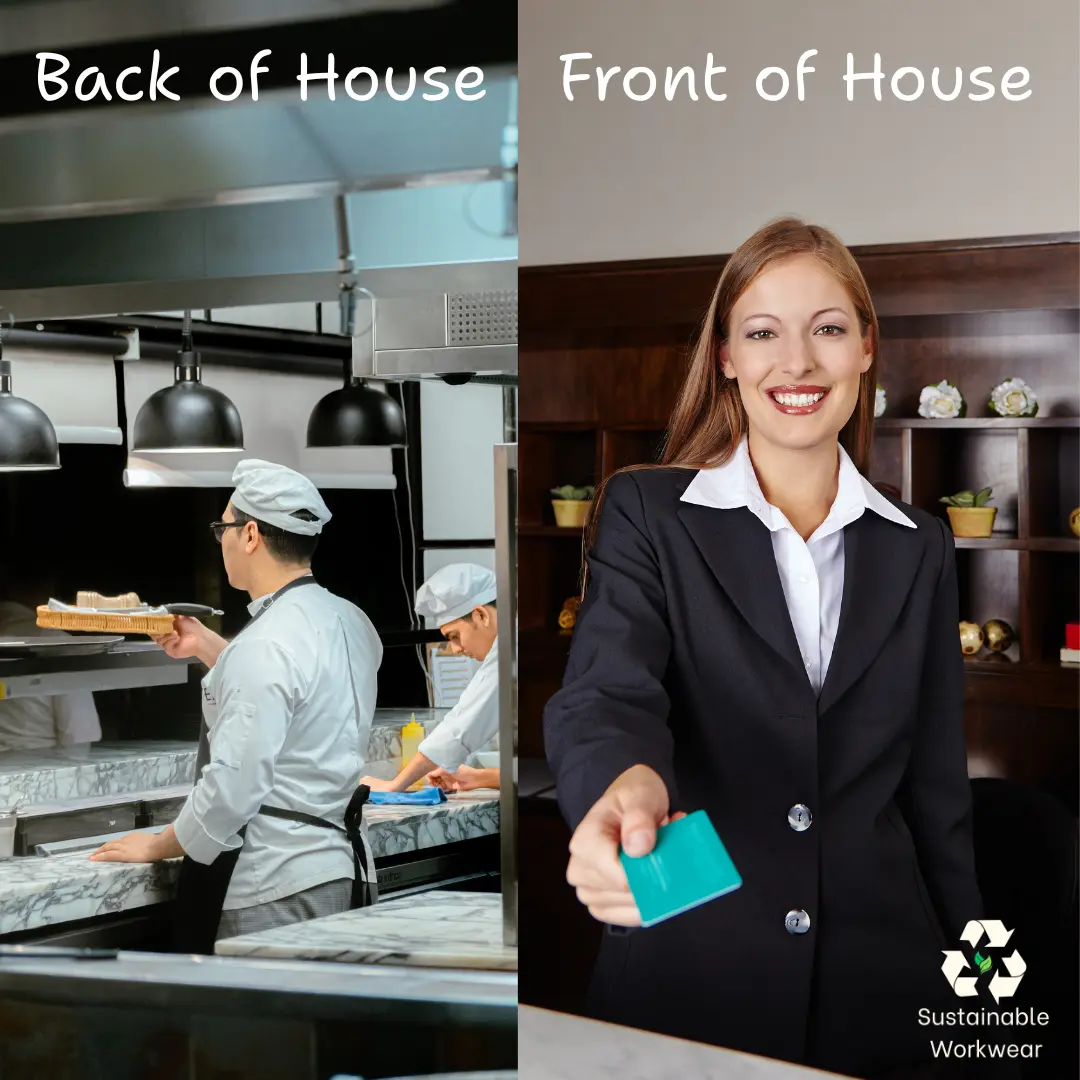
Most hospitality operations have a mix of roles; front-of-house, back-of-house, housekeeping and events. The goal is not to give everyone identical clothing, but to create a coherent look that still works for what each person does all day.
- Front-of-house: reception, bar and floor staff
These staff are the most visible in photographs, reviews and guest memories.
Practical options include:
- Organic cotton shirts or polos in your core brand colour
- Branded aprons for bar and floor staff to give a consistent look across spaces
- Lightweight cardigans, gilets or softshells for colder days and outdoor terraces
- Back-of-house: kitchen, wash-up and porters
Here, freedom of movement, hygiene and temperature control matter most.
Consider:
- Comfortable organic t-shirts or chef jackets that breathe well
- Trousers with room to move and secure pockets where appropriate
- Aprons made with robust fabrics that can handle spills and frequent washing
- Hi-vis vests or jackets for goods-in and bins area if staff move in shared yards
- Housekeeping and maintenance
These roles are often overlooked in uniform planning, but they are highly visible to guests.
Options include:
- Organic polos or tunics in a calm, professional colour
- Comfortable trousers or skirts that allow bending and lifting
- Lightweight recycled softshells or fleeces for moving between rooms, corridors and outdoors
- Events and outdoor service
For weddings, festivals and terrace service, layering is key.
Think about:
- A smart base layer (shirt or polo) that matches indoor staff
- A mid-layer such as a gilet or softshell in cooler months
- Weather-resistant outer layers made with recycled polyester where possible
Design, branding and keeping it simple
You do not need complex designs to make sustainable hospitality uniforms work. Simple, consistent choices usually look better and are easier to reorder.
- Choose one or two base colours that match your venue branding.
- Keep logos clear and readable. Avoid tiny text or overly detailed graphics.
- Use the same logo position (for example, left chest) across most garments.
- Differentiate roles subtly with apron colours, name badges or small details, rather than completely different outfits.
From the guest’s perspective, the aim is simple: staff are easy to spot, look like one team and visually match the story you tell about quality and sustainability.
Laundering, hygiene and real-world practicalities
Hospitality uniforms have to cope with spills, stains and frequent washing. When you specify sustainable uniforms, also think about:
- Who is responsible for washing? Staff at home or an external laundry and what temperatures are typical.
- Choosing fabrics and colours that still look good after many washes (slightly mottled or textured fabrics can hide wear better than flat black).
- Clear care labels and guidance so garments are not ruined by the wrong wash cycle.
- Having a sensible number of garments per staff member so there is always a clean set available.
Sustainability is easier to talk about when uniforms still look “service ready” after a busy weekend, rather than tired or stained.
Costs, phasing and avoiding waste
Many operators assume sustainable hospitality uniforms will be too expensive. In practice, costs can be managed sensibly.
- Organic and Fairtrade options can cost a little more per garment, but better durability and wash performance often balance this out.
- Standardising on a small number of core garments reduces ordering mistakes and unused stock in odd sizes.
- You can phase in new uniforms gradually. Starting with new hires, new outlets or teams most visible to guests.
- Clear guidelines for staff on what is provided and what is personal (for example, footwear) reduce confusion.
Viewed over a year or more, better uniforms can reduce waste, emergency orders and the hidden costs of inconsistent appearance.
For a broader overview of sustainable workwear standards, sourcing and long-term supply considerations in Ireland, see our main guide to sustainable workwear in Ireland.
How to get started without overcomplicating it
You do not need a huge project plan to move from ad-hoc uniforms to a sustainable, coherent approach. A short, focused process is enough.
Step 1: Map your roles and current uniforms
List your main roles (for example, barista, floor, reception, kitchen, housekeeping, events), how many staff are in each, and what they currently wear. Note any pain points staff mention – too hot, too cold, uncomfortable fabrics, hard to keep clean.
Step 2: Decide on 3–4 non-negotiables
Agree a small set of rules, such as:
- Organic or Organic In Conversion cotton for all core tops (shirts, polos, t-shirts)
- Fairtrade cotton used where possible on flagship garments
- Recycled polyester used in aprons, softshells and outer layers
- A maximum of two main brand colours across the uniform range
Step 3: Build a simple hospitality uniform list
Turn this into a one-page list, for example:
- Role: Front-of-house; organic shirt + branded apron + optional softshell
- Role: Barista; organic t-shirt or polo + heavy apron
- Role: Kitchen; breathable chef jacket + trousers + apron
- Role: Housekeeping; organic polo or tunic + comfortable trousers
- Role: Events/outdoor; base layer + mid layer + recycled outer layer
This list becomes the basis for ordering, onboarding and conversations with suppliers.