
Most organisations now talk about sustainability in their tenders and procurement policies. But uniforms and PPE are often left as a generic line item: “supply of workwear and hi-vis”.
If you want your sustainable workwear goals to actually show up in contracts and on sites, you need to build them into specifications, award criteria and contract management.
For a full overview of sustainable workwear standards, certifications and long-term supply considerations for Irish organisations, see our main guide to sustainable workwear in Ireland.
This guide sets out practical ways to do that, with sample wording you can adapt for Irish public and private tenders.
Why uniforms need to match your ESG commitments
Uniforms are:
- Highly visible to clients and the public
- Worn daily by staff across multiple sites
- A significant line in your indirect spend
If your ESG report talks about Fairtrade, Organic and Recycled materials, but your staff uniforms are cheap, short-life garments with no traceability, there is a gap.
Building sustainable workwear into tenders helps you:
- Reduce environmental impact (less virgin polyester, better cotton)
- Support fair working conditions in your supply chain
- Provide evidence for ESG, CSRD and responsible procurement
- Avoid accusations of greenwashing
Where to include sustainable workwear in a tender
There are four main places to bake sustainability into a tender or contract:
- Scope of requirements
- Technical specifications
- Award criteria
- Contract management and reporting
Scope of requirements
Make it clear from the start that sustainability is part of the requirement, not an optional extra.
Example wording:
“The scope of this framework includes the supply of branded workwear and PPE, with a focus on sustainable options such as Fairtrade cotton, Organic cotton and Recycled polyester garments where suitable for the role and safety requirements.”
This signals to bidders that sustainable workwear is expected, not a nice-to-have.
2. Technical specifications
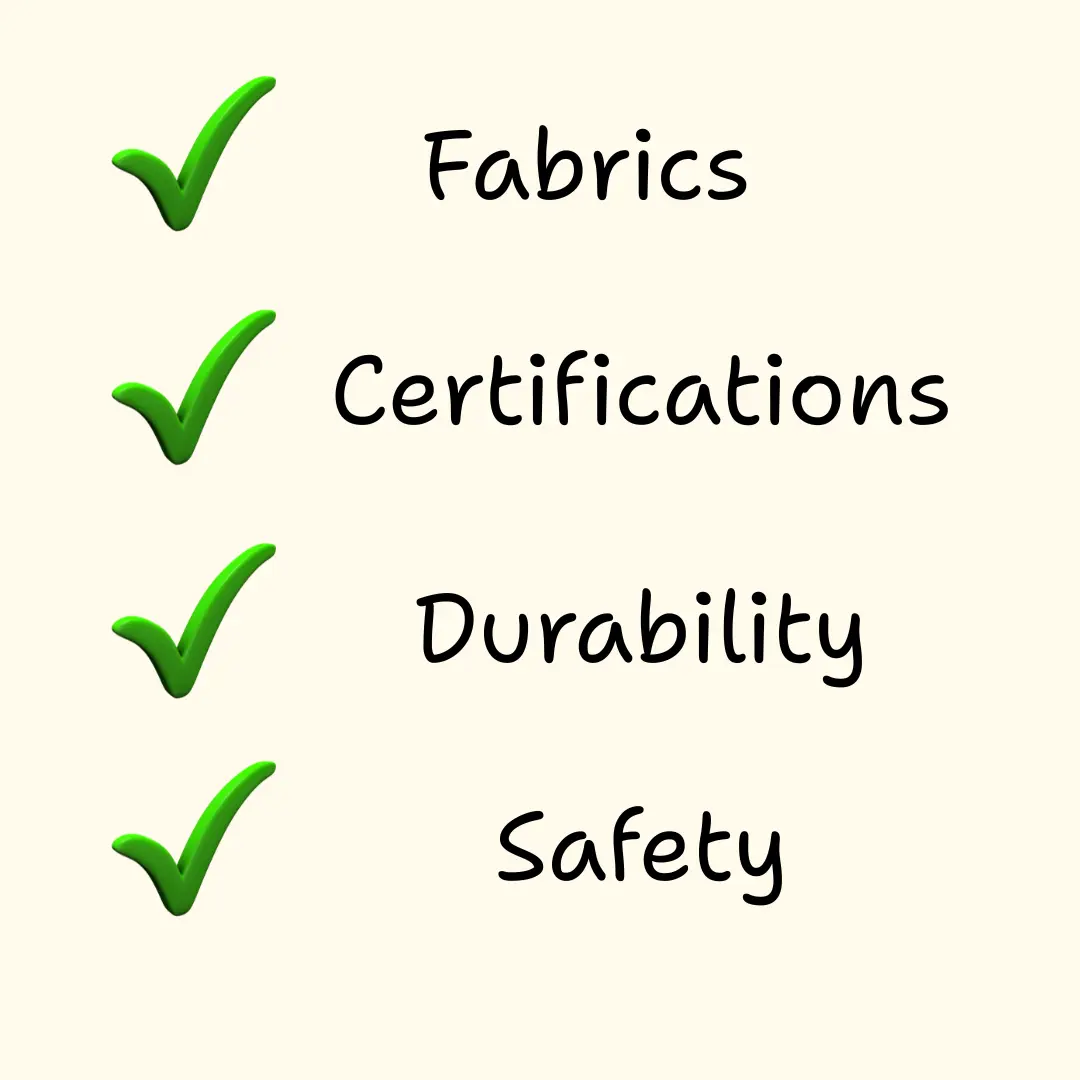
Set minimum standards for:
- Fabrics and materials
- Certifications (e.g. Fairtrade, credible organic standards, recycled content claims)
- Performance and durability
- Safety standards (for hi-vis and PPE)
Example clauses:
- “Polo shirts and t-shirts for customer-facing staff must be made from 100% Organic or Organic In Conversion cotton or Fairtrade certified cotton.”
- “Hi-vis garments must meet the relevant EN / ISO safety standards and, where possible, use recycled polyester with a minimum of X% recycled content.”
- “Garments must be colour-fast and suitable for frequent industrial laundering, with an expected lifespan of at least [X] washes under normal use.”
You can link to your own sustainable workwear guide as a reference document if helpful.
3. Award criteria
Do not treat sustainability as a bolt-on. Give it a clear weighting.
Example basic structure:
- Price: 40-50%
- Quality and service: 20–30%
- Sustainability and traceability of workwear: 30%
Under “Sustainability and traceability”, you can ask bidders to demonstrate:
- Use of Fairtrade, Organic and Recycled garments where suitable
- Evidence of audited factories and ethical sourcing
- Approach to waste reduction and end-of-life for uniforms
- Ability to supply documentation for client ESG / CSRD reporting
4. Contract management and reporting
Sustainable uniforms are not just a tender story. Build them into ongoing reporting.
Example requirements:
- Annual summary of garments supplied, including % of Fairtrade cotton, Organic cotton and Recycled polyester
- Confirmation that safety and quality standards remain in place
- Notification of any significant changes in the supply chain
This gives you real data to back up sustainability claims in reports and client discussions.
What “good” sustainable workwear looks like in practice
When you write tenders or supplier contracts, it helps to know what “good” looks like at garment level.
Typical examples:
- Front-of-house uniforms: Organic or Fairtrade polos, shirts and aprons; comfortable, breathable fabrics for long shifts.
- Hi-vis and PPE: Recycled polyester hi-vis vests and jackets; robust stitching and durable zips; certified to relevant EN / ISO standards.
- Corporate and office-wear: Organic cotton shirts and blouses; recycled-content mid-layers and jackets.
The aim is simple: match the fabric and specification to the role, without defaulting to the cheapest, least traceable option.
Simple specification templates you can reuse
You do not need to reinvent the wheel for every tender. A few reusable lines go a long way.
- Example 1: General sustainable workwear clause
“The Contractor shall prioritise the use of sustainable workwear options, including Fairtrade cotton, Organic cotton and Recycled polyester garments, where suitable for the role and safety requirements. The Contractor shall be able to provide evidence of certifications and traceability on request.”
- Example 2: Polos and t-shirts
“Standard polos and t-shirts for staff shall be made from 100% Organic cotton, Fairtrade cotton and/or Recycled Polyester, with clear labelling and certification. Garments shall be breathable, comfortable for extended wear and suitable for repeated washing without significant shrinkage, twisting or fading.”
- Example 3: Hi-vis and PPE
“Hi-vis vests and jackets shall meet applicable EN / ISO safety standards and, where possible, be made using recycled polyester with a minimum recycled content of 100%. All garments shall be durable and suitable for typical site conditions in Ireland.”
You can keep these as a short internal toolkit for anyone in your organisation who writes specs or tenders.
Avoiding greenwashing in uniforms
It is easy to end up with “eco” language in tenders that delivers little change. To avoid that:
- Avoid vague phrases like “environmentally friendly uniforms” without detail
- Ask for specific certifications (Fairtrade, credible organic standards, recycled-content claims)
- Require product data sheets, not just brochure language
- Ask suppliers to explain how sustainable workwear fits into their overall range, not just a small “green capsule collection”
If you are unsure what is realistic, talk to a specialist. Sustainable Workwear Ireland works only with Fairtrade, Organic and Recycled uniforms, so you can sense-check specifications before they go into a tender.
Internal alignment: procurement, H&S, HR and finance
Good specifications usually come from more than one desk. For sustainable uniforms, it helps to involve:
- Health and Safety: to confirm standards and performance in real conditions
- HR / People: to consider staff comfort and image
- Finance: to look at total cost of ownership, not just unit price
- Procurement: to embed requirements into templates and contracts
A short internal workshop or meeting can agree:
- Minimum standards for key garments
- Priorities (e.g. hi-vis first, then polos, then outerwear)
- How performance and costs will be measured over time