
Commercial kitchen uniforms have a difficult job. They need to look professional, let staff move freely, cope with the heat and pressure of a working kitchen, and survive repeated washing without losing shape or colour.
A uniform can look entirely suitable when it arrives and still proves to be the wrong choice within weeks. Jackets restrict movement. Trousers fit inconsistently across the team. Colours fade at different rates. Replacement garments arrive in a shade that no longer matches the original order.
For hotels, restaurants, cafés and catering businesses, the useful approach is to treat the kitchen uniform as a complete working system. Fit, fabric, wash performance, consistency and future availability all matter more than the initial price of any individual garment.
Treat the Kitchen Uniform as a Complete System
A kitchen uniform is more than a chef jacket. Depending on the role and the working environment, it may include:
● chef jackets or tunics
● chef trousers
● aprons
● skull caps and other headwear
● additional garments for food service or customer-facing duties
These items must work together. A breathable jacket delivers little benefit if the trousers are heavy and restrictive. A well-chosen uniform loses its professional appearance if replacement garments arrive in a visibly different shade. An apron that performs well during service is poor value if it cannot survive the laundry routine it will actually face.
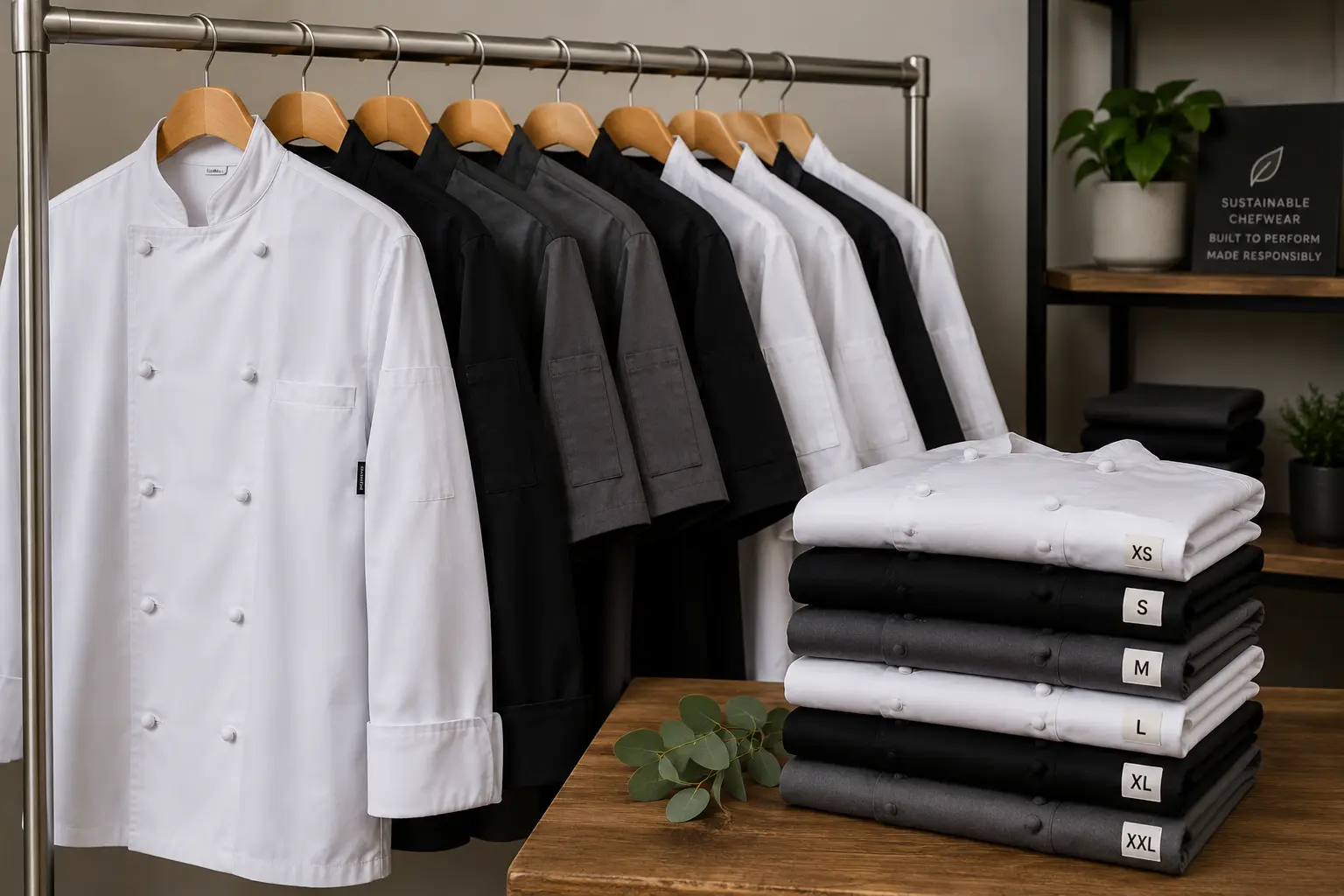
Before ordering, map out what each kitchen role requires and identify which garments should be standard across the team. Our full sustainable chefwear range covers chef jackets, trousers, headwear and kitchen accessories for cafés, restaurants, hotels and catering operations.
Fit Must Work Across the Whole Team
Fit is the most common difficulty when ordering chef uniforms for a team rather than an individual.
Staff have different body shapes, different preferences and different jobs. Some want a more tailored jacket; others prioritise room to move. A garment that suits a head chef may not be the right choice for preparation, pastry or kitchen porter staff.
Before selecting a uniform, consider:
● the full-size range available
● men's, women's and unisex fits
● short and long sleeve options
● room for movement through the shoulders and arms
● trouser waist styles and leg lengths
● whether garments will be layered
● how easily replacement sizes can be ordered later
Do not rely on a single sample size, and do not assume one unisex garment will suit everyone. Where possible, test the range across several staff members before committing to a larger branded order.
The goal is not a different uniform for every employee. It is a consistent visual standard with enough flexibility that people can work comfortably.
Choose Fabric for the Role and the Environment
There is no single fabric specification that suits every commercial kitchen. The right choice depends on the heat, the amount of movement required, the washing process, and the balance between comfort and durability.
Jackets and tunics need to stay comfortable across a long shift while holding a professional shape. Trousers must allow bending, lifting and constant movement. Aprons take spills and frequent washing. Headwear has to remain comfortable enough to be worn right through service.
When comparing garments, check:
● fabric composition and weight
● breathability and drying time
● crease resistance
● stretch or ease of movement
● colour retention
● recommended wash temperature
● whether the fabric suits your intended laundry process
A lighter fabric may feel better in a hot kitchen but may not suit every role or wash routine. A heavier fabric offers more structure but can become uncomfortable across a long service. The decision depends on how and where the garment will actually be used.
Wash Performance Determines the Real Cost
Kitchen garments are washed far more often than ordinary clothing, and that exposes weaknesses in fabric, stitching, colour retention and construction quickly.
Before ordering, check the care instructions for the specific garment against the way your uniforms are actually laundered. Do not assume every chef garment tolerates the same wash temperature or suits a commercial laundry process.
Questions worth asking:
● What wash temperature is recommended?
● Is the garment suitable for repeated commercial laundering?
● Will the colour stay consistent across regular cycles?
● Is shrinkage likely?
● Can it be tumble dried, and does it need significant ironing?
● How will embroidery or printed branding hold up?
● Will replacement garments match the original order?
A cheaper uniform that needs replacing after a few months can cost considerably more than a better garment with a higher initial price. The measure that matters is not cost per garment. It is the cost of keeping the team properly uniformed across a full year.
Replacement carries an operational cost too. Management time goes into finding alternatives, rechecking sizes, approving branding again and trying to match garments that have been discontinued. Better wash performance and consistent supply remove that disruption.
Standardise What You Can
Uniform consistency matters in hospitality even when most of the kitchen team works out of sight. Staff move into open kitchens, counters and buffet areas. Photographs and video regularly feature kitchen teams. Mixed styles, inconsistent colours and visibly worn garments undermine the standard the business is trying to present.
Create a basic kitchen uniform specification covering:
● approved garment styles and colours
● logo position, size and branding method
● individual sizing records
● wash and care instructions
● replacement and reordering procedures
Keep a record of the exact garment references used. Product names alone are often not enough, particularly where several visually similar styles exist.
Where the kitchen uniform forms part of a wider team requirement, review it alongside your hospitality uniforms for front of house, service, event and management staff. The performance requirements differ, but the overall brand presentation should still hold together.
Check the Practical Details
Small design details make a substantial difference across a busy shift. On jackets and tunics, look at the security of fastenings, reinforcement at stress points, pocket placement and sleeve design. On trousers, check the waistband, fastening, pocket security and leg shape. Aprons should be assessed for coverage, strap comfort and ease of laundering.
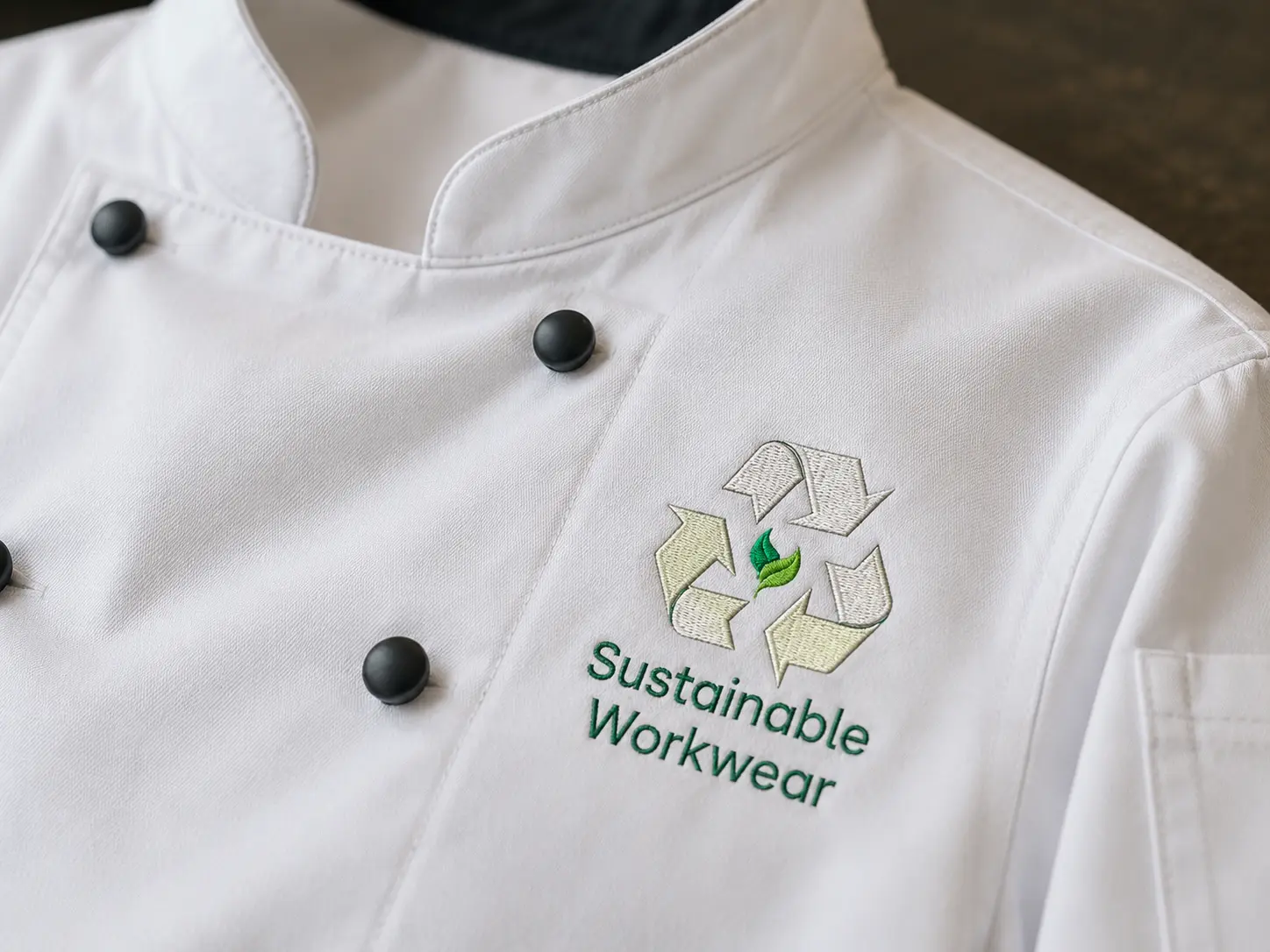
Branding needs to suit the garment rather than being decided after it. A large, heavy embroidery area can affect how a lightweight jacket sits, so logo size, position, fabric weight and branding method are best considered together.
Sustainable Materials Still Have to Perform
Sustainability should strengthen a purchasing decision, not replace the practical assessment. A garment being Fairtrade, organic or recycled does not prove it suits your kitchen, your roles or your wash process. Fit, fabric, construction and care requirements still need checking.
What certification gives you is different and equally useful: documentation showing which verified material standards and claims apply to the specific garment you are ordering. That supports procurement requirements, sustainability reporting and responsible sourcing commitments, and it means you are not relying on a supplier's general environmental language.
Sustainable Workwear supplies chef uniforms that are Fairtrade, organic or recycled. We do not carry a conventional range with a small environmental collection alongside it. Our wider guide to sustainable workwear in Ireland sets out the certification and traceability principles behind that approach.
For a kitchen uniform, the strongest outcome is a garment that performs properly, lasts its intended service life, and has credible documentation behind its material claims.
What to Ask Before Ordering Chef Uniforms
Before approving an order, ask your supplier:
1. Which garments suit the different roles in our kitchen?
2. Are men's, women's and unisex fits available?
3. Can staff try samples before we commit to the full order?
4. What are the recommended wash and drying instructions?
5. Is the garment suitable for our laundry process?
6. Which branding method works best on this garment?
7. Can the same styles and colours be reordered later?
8. What happens if a garment is discontinued?
9. Can certification documents be supplied for these specific products?
Clear answers now are worth considerably more than discovering the limitations after the garments have been branded.
Getting Started
Start with the working environment rather than a product code. Tell the supplier the type of operation, the kitchen roles being uniformed, the number of staff, the colours required, your current laundry process, your branding requirements, the delivery date you need, and whether ongoing replacement orders are likely.
Sustainable Workwear supplies chef uniforms to restaurants, hotels, cafés, catering businesses and hospitality teams across Ireland. Our chefwear range is Fairtrade, organic or recycled, covering jackets, trousers, tunics, aprons, headwear and kitchen accessories. Branding is available in embroidery or water-based screen print transfers, depending on the garment and the finish you want.
→ Contact us with your team size, preferred styles and wash requirements, and we will recommend suitable garments, branding options and realistic lead times.